
Have you ever felt satisfied after a meal but still found yourself raiding the cupboards a couple of hours later? Or struggled with sluggish digestion, energy crashes, or stubborn weight that just won’t shift?
The answer might be simpler than you think – and it’s something most people in the UK (and worldwide) are seriously lacking: dietary fibre.
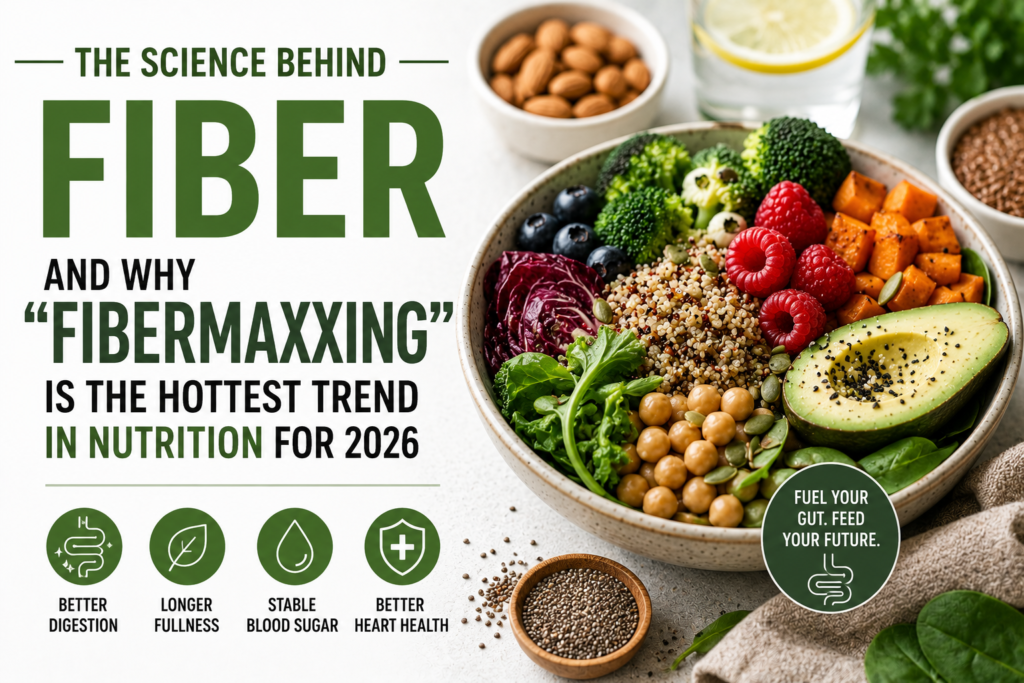
As we move through 2026, “fibermaxxing” has exploded in popularity. While protein dominated conversations last year, fibre is now stepping into the spotlight as the nutrient that delivers better satiety, stable energy, improved gut health, and easier weight management. It’s practical, affordable, and backed by growing science.
What Is Dietary Fibre, Really?
Fibre is the indigestible part of plant foods. Unlike protein, fats, or carbohydrates, your body doesn’t break it down for calories in the same way. Instead, it passes through your digestive system, doing powerful work along the way.
There are two main types:
- Soluble fibre – dissolves in water and forms a gel-like substance. It helps slow digestion, stabilise blood sugar, and lower cholesterol.
- Insoluble fibre – adds bulk to stool and helps food move through your system more efficiently.
Most people only get around 15–20g per day in the UK, while experts recommend 30g+ for optimal health. That gap explains why so many experience bloating, irregular digestion, constant hunger, and blood sugar rollercoasters.
Why Fibre Keeps You Fuller for Longer (Just Like Protein – But With Extra Benefits)
Like protein, fibre is highly satiating. It physically fills your stomach and slows the emptying rate, so you feel satisfied for longer.
But fibre goes further:
- It feeds your gut microbiome – the trillions of bacteria living in your intestines. These microbes ferment fibre and produce short-chain fatty acids (SCFAs) that signal fullness to your brain, reduce inflammation, and support metabolic health.
- Soluble fibre blunts blood sugar spikes, preventing the energy crashes that lead to cravings.
- It adds volume to meals without adding many calories – perfect for feeling full while managing weight naturally.
Studies consistently show that higher fibre intakes are linked to better appetite control, lower calorie consumption overall, and improved body composition.
The Gut Health Revolution
Your gut isn’t just about digestion anymore. In 2026, we understand it as a central hub for immunity, mood, metabolism, and even skin health.
When you eat enough fibre (especially a variety from different plants), you increase microbiome diversity. This diversity is associated with:
- Stronger immune function
- Better mood regulation (via the gut-brain axis)
- Improved insulin sensitivity
- Reduced chronic low-grade inflammation
Fermented foods (like yogurt, kefir, sauerkraut) provide probiotics, but fibre-rich plants provide the prebiotics – the fuel those good bacteria need to thrive. Combining both is one of the smartest strategies this year.
Fibre vs Modern Diets
Ultra-processed foods are typically stripped of fibre. White bread, sugary cereals, snacks, and fast food digest quickly, leaving you hungry again soon after – and often under-nourished in the microbiome department.
In contrast, fibre-rich meals create steady energy and genuine satisfaction. Think:
- Overnight oats with berries, chia seeds, and Greek yogurt
- Lentil or chickpea curries with plenty of vegetables and brown rice
- Big salads loaded with beans, avocado, nuts, and olive oil dressing
These meals keep you full, support steady blood sugar, and nourish your gut all at once.
Practical Benefits People Notice in 2026
People who successfully increase their fibre intake often report:
- Fewer cravings and less mindless snacking
- More regular, comfortable digestion (goodbye constipation!)
- Steadier energy throughout the day
- Easier weight management without feeling deprived
- Better skin clarity and reduced bloating
- Improved mood and mental clarity
It’s sustainable because you’re adding nourishing foods rather than restricting.
How to Fibermaxx Without the Bloat
Don’t go from zero to hero overnight – your gut needs time to adjust.
Smart ways to increase fibre:
- Start your day with fibre-rich breakfasts (oats, chia pudding, wholegrain toast with avocado).
- Add beans, lentils, or chickpeas to lunches and dinners – they’re cheap, filling, and versatile.
- Snack on fruit with skin, raw vegetables with hummus, or a handful of nuts/seeds.
- Swap white rice/pasta for brown, quinoa, or bulgur.
- Include a wide variety of plants – aim for 30 different plant foods per week for maximum microbiome benefits.
Drink plenty of water, increase gradually, and pair with fermented foods for best results.
The Bigger Picture: Food as Everyday Medicine
The rise of fibre reflects a healthier shift in how we think about nutrition. Instead of extreme diets or quick fixes, people are focusing on foods that genuinely support how they want to feel every day.
Fibre isn’t trendy because of hype – it’s trending because it works. It helps bridge the gap between wanting to eat well and actually feeling the benefits in your energy, digestion, mood, and waistline.
In 2026 and beyond, building meals around fibre-rich whole foods might be one of the simplest and most effective ways to invest in your long-term health.
Book a Free Wellness Evaluation
Reach Us
Location:
Croxteth Park Nutrition, St Mary’s Millennium Centre, West Derby, Liverpool L12 5EA
Opening Hours:
Mon: 6:30 am – 11 am
Tues: 6:30 am – 11 am
Wed: 6:30 am – 11 am
Thurs: 6:30 am – 11 am
Fri: 6:30 am – 11 am
Sat: 7 am – 11 am