
“Drink more water.”
It’s one of the most common pieces of health advice people hear, but surprisingly, many people still aren’t sure how much water they actually need each day.
Some recommendations say eight glasses a day is enough, while others suggest much higher amounts depending on activity levels, body weight and climate. Add social media wellness trends into the mix, and hydration advice can quickly become confusing.
The truth is that water needs vary from person to person. Factors like age, body size, exercise, weather and even diet can all affect how much fluid your body requires.
Still, there are some useful guidelines that can help most people stay properly hydrated.
Why Water Matters So Much
The human body is made up of around 60% water, and nearly every major system depends on it functioning properly.
Water helps:
- Regulate body temperature
- Support digestion
- Transport nutrients
- Lubricate joints
- Maintain energy levels
- Support brain function
Even mild dehydration can sometimes affect concentration, mood and physical performance.
That’s one reason hydration has become such a major topic in health and wellness conversations in recent years.
The General Daily Recommendation
Health experts often recommend around:
- 2 litres per day for women
- 2.5 litres per day for men
That includes fluids from water, tea, coffee, milk and foods with high water content like fruit and vegetables.
In simpler terms, many people aim for around 6 to 8 glasses of water daily as a basic starting point.
But those numbers are only general guidelines.
Your Water Needs May Be Higher If You Exercise
One of the biggest factors affecting hydration is physical activity.
When you sweat during exercise, your body loses fluids much faster. Intense workouts, running, gym sessions or sports can significantly increase daily water requirements.
Someone doing regular exercise may need an additional:
- 500ml to 1 litre or more per hour of activity
This is especially important during hot weather or long training sessions where sweat loss is higher.
Many athletes now pay close attention to hydration because even small drops in fluid levels may affect performance and recovery.
Weather Makes a Huge Difference
Temperature and climate also play a major role.
During hot weather, the body naturally sweats more to cool itself down. That means people often need far more water in summer than they do during colder months.
Humidity can make this even more noticeable because sweat evaporates less efficiently, making it harder for the body to cool down.
People living in hotter climates or travelling during heatwaves may need substantially more fluids than standard recommendations suggest.
Does Body Weight Affect Hydration Needs?
Body size matters too.
Larger individuals generally require more water because they have more body tissue and a higher overall fluid requirement.
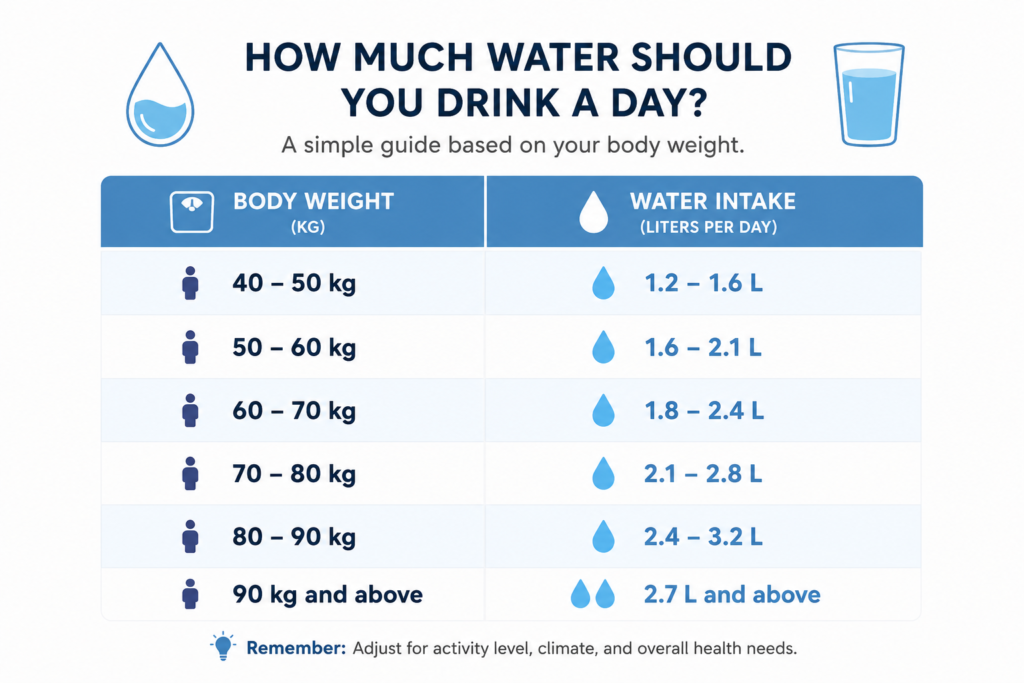
A commonly discussed guideline is:
- Around 30–35ml of water per kilogram of body weight
For example:
- A 60kg person may need around 1.8–2.1 litres daily
- An 80kg person may need around 2.4–2.8 litres daily
- A 100kg person may require 3 litres or more
Again, these figures can increase depending on exercise, heat and lifestyle.
Age Can Also Change Hydration Requirements
Children, adults and older adults all have slightly different hydration needs.
Older adults may actually be at greater risk of dehydration because the body’s natural thirst signals can weaken with age. Some people simply don’t feel thirsty as often, even when fluid levels are low.
Children, meanwhile, lose fluids more quickly during physical activity and hot weather because of their smaller body size.
That’s why hydration becomes particularly important during exercise, travel and warmer seasons.
Can You Drink Too Much Water?
Although dehydration is far more common, it is technically possible to drink too much water in a short period of time.
This is known as water intoxication or hyponatremia, where sodium levels in the body become dangerously diluted.
However, this is relatively rare and usually linked to extreme endurance events or excessive fluid intake over a short time.
For most people, simply drinking consistently throughout the day and responding to thirst is enough to avoid problems.
Signs You May Not Be Drinking Enough Water
Hydration needs are individual, but some common signs of dehydration include:
- Headaches
- Fatigue
- Dry mouth
- Dark yellow urine
- Dizziness
- Reduced concentration
One of the easiest ways to monitor hydration is by checking urine colour. Pale yellow is generally considered a sign of good hydration, while darker colours may suggest you need more fluids.
Does Tea and Coffee Count?
Despite popular myths, tea and coffee do contribute toward daily fluid intake.
While caffeine can have a mild diuretic effect, moderate amounts of coffee and tea still provide hydration overall.
Foods also contribute more water than many people realise. Fruits like watermelon, oranges and strawberries contain large amounts of fluid, while vegetables such as cucumber and lettuce are naturally high in water too.
The Best Approach to Staying Hydrated
Rather than obsessing over exact numbers, most experts recommend focusing on consistency.
Simple habits like:
- Drinking water throughout the day
- Carrying a reusable bottle
- Increasing fluids during exercise
- Drinking more during hot weather
can make a noticeable difference.
Listening to thirst signals and adjusting intake based on activity and environment is often more practical than following rigid rules.
There’s no perfect one-size-fits-all answer to how much water someone should drink each day.
Hydration needs depend on factors like body size, activity levels, age and climate. But for most people, aiming for around 2 to 3 litres of fluids daily is a sensible starting point.
And sometimes, improving energy, focus and wellbeing can start with something as simple as drinking enough water.
Book a Free Wellness Evaluation
Reach Us
Location:
Croxteth Park Nutrition, St Mary’s Millennium Centre, West Derby, Liverpool L12 5EA
Opening Hours:
Mon: 6:30 am – 11 am
Tues: 6:30 am – 11 am
Wed: 6:30 am – 11 am
Thurs: 6:30 am – 11 am
Fri: 6:30 am – 11 am
Sat: 7 am – 11 am