
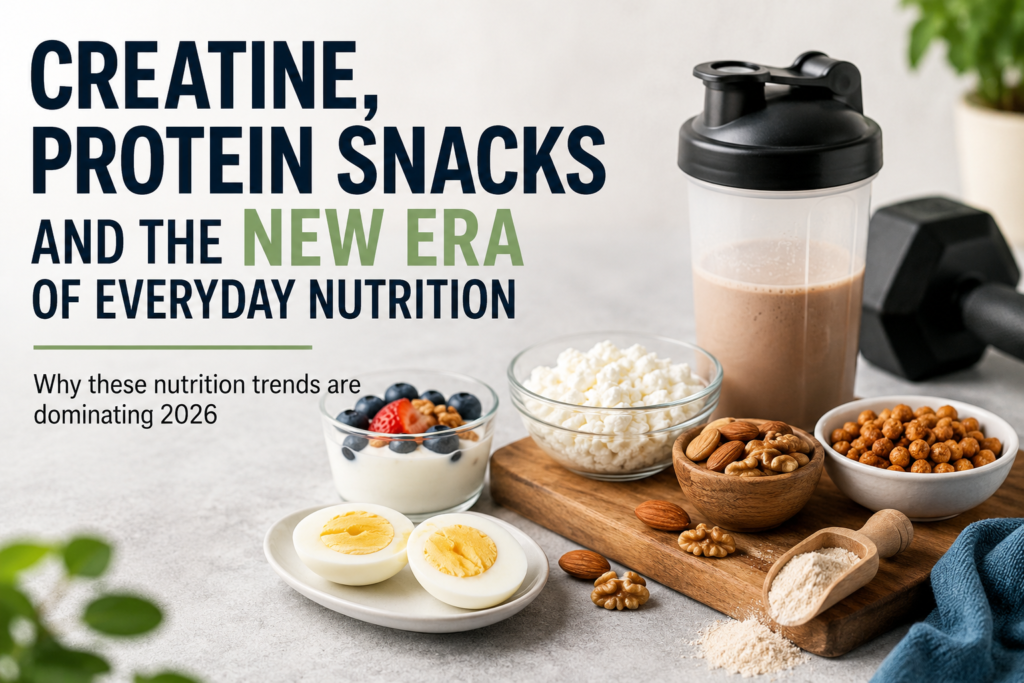
Not long ago, creatine was something most people associated with bodybuilders and hardcore gym culture. Protein snacks weren’t much different either, usually marketed toward athletes chasing muscle gains or fitness influencers posting meal prep videos online.
Fast forward to 2026, and both have gone completely mainstream.
Now you’ll hear office workers talking about protein intake over coffee, runners adding creatine to their morning routines, and supermarkets filling shelves with high-protein foods aimed at everyday consumers rather than elite athletes. The conversation around nutrition has shifted dramatically, and it’s no longer just about losing weight. People are becoming more interested in energy, recovery, strength and long-term health.
That change is one of the biggest reasons creatine has become such a major nutrition trend this year.
Why Everyone Is Suddenly Talking About Creatine
Part of the reason creatine has exploded in popularity is because it’s no longer viewed as an “extreme fitness” supplement. Researchers have studied it for decades, and recent conversations around healthy ageing, brain function and recovery have pushed it into the spotlight again.
Social media has played a big role too. Fitness creators and health podcasts regularly discuss how creatine may support performance and recovery, while short-form videos have introduced the topic to millions of younger audiences who are becoming more health-conscious earlier in life.
Unlike many viral wellness trends, creatine has something most internet health crazes don’t: years of scientific research behind it.
At the same time, people are training differently than they did ten years ago. Modern fitness culture has become more focused on sustainability rather than extremes. Walking, strength training and balanced nutrition are replacing crash diets and endless cardio sessions. In that environment, creatine fits naturally into the conversation.
The Rise of Real Food Protein Snacks
Protein itself has also become one of the biggest buzzwords in nutrition.
But interestingly, many people are starting to move away from heavily processed snack bars and toward simpler, more natural options. Foods like Greek yogurt, boiled eggs, cottage cheese, nuts and roasted chickpeas have become increasingly popular because they feel less like “diet food” and more like everyday healthy eating.
Nutrition experts often point out that protein helps people feel fuller for longer, which may explain why high-protein breakfasts and snacks are becoming so common. Instead of reaching for sugary snacks that lead to energy crashes, more consumers are looking for foods that support stable energy throughout the day.
This trend is especially noticeable among younger adults, many of whom are now more interested in strength, recovery and long-term wellness than traditional dieting.
Social Media Is Changing the Way People Eat
One of the biggest drivers behind these trends is how quickly nutrition information now spreads online.
A single TikTok video discussing “high-protein meal ideas” or “creatine benefits” can reach millions of people within hours. Some of the information online is questionable, but it has undeniably made nutrition more mainstream and accessible than ever before.
As a result, everyday people are becoming far more aware of concepts that were once limited to sports science communities, things like recovery nutrition, muscle maintenance and balanced eating habits.
A Bigger Shift in Health Culture
What’s really happening goes beyond creatine or protein snacks themselves.
People are beginning to approach health differently. Instead of looking for quick fixes, there’s growing interest in habits that feel realistic and sustainable. Walking more, lifting weights, eating enough protein and prioritising recovery are becoming part of normal life rather than niche fitness culture.
That’s why trends like creatine have staying power. They connect with a broader movement toward practical health habits instead of extreme dieting or unrealistic transformations.
And judging by the way the nutrition industry is evolving, this shift is probably only just getting started.
Book a Free Wellness Evaluation
Reach Us
Location:
Croxteth Park Nutrition, St Mary’s Millennium Centre, West Derby, Liverpool L12 5EA
Opening Hours:
Mon: 6:30 am – 11 am
Tues: 6:30 am – 11 am
Wed: 6:30 am – 11 am
Thurs: 6:30 am – 11 am
Fri: 6:30 am – 11 am
Sat: 7 am – 11 am